
Scrap is one of the few industries where the same business buys, processes, stores, prices and sells, often in the same week, which is exactly why keeping track of it is harder than it looks. For a fuller picture of how digital inventory works in this trade, the scrap inventory management software guide is well worth an evening.
For owners wondering where the budget should go, an honest starting point is the best scrap yard management software guide, which sets out what different systems actually do and what they replace.
Multiple Yards, More Stock and Records That Survive It
Reporting is where that data finally starts paying for itself. A monthly report built from accurate records, what was bought, what was sold, what’s still sitting, what moved slowly, tells a yard owner in ten minutes what a month of guessing never could.
The good news for smaller operations is that the reporting worth having is simple. Turnover of stock, average time to sell, margin per trade and a list of material that hasn’t moved in ninety days will outperform most dashboards that nobody opens.
Choosing Software Without Buying Trouble
Software buyers in this trade usually fall into one of two traps: choosing the cheapest thing and outgrowing it in six months, or choosing the most complete thing and using a tenth of it. The sensible middle is where the value actually lives.
The best advice from yards that have already done it: pick the system your least technical member of staff can use, because they’re the one who’ll decide whether it sticks.
Why Clear Inventory Records Matter
The businesses that do this well tend to find that records start answering questions they hadn’t thought to ask. Which grade moves fastest, which supplier delivers consistent loads, which corner of the yard has been holding the same material for eight months. None of it is visible until the information lives in one place and is accurate enough to trust.
A useful test of your records is whether someone else could sell your stock from them alone. If a colleague, an agent or a buyer can’t tell what’s available, in what grade and where, then the record exists for you and not for the business.
It’s also worth acknowledging how much of this work already happens in people’s heads. The long-serving member of staff who knows every grade by eye, the driver who remembers which factory has a clear-out every March, the owner who can quote yesterday’s price without checking, all of that is real institutional knowledge. Recording it isn’t replacing anyone. It’s making sure the business can still function on the Friday they take off.
Spreadsheets, Software and Everything In Between
Plenty of yards run happily on a well-maintained spreadsheet for years, and moving too early is a genuine mistake. The signal that it’s time is usually repetition: when the same work gets done twice, when prices get looked up manually, or when nobody can answer ‘what have we got in stock’ without putting their boots on.
Whatever sits in between, the goal is the same: records that any member of the team can use, that don’t rely on one particular person to maintain, and that survive a busy week without falling behind reality.
From Stock Records to Real Trading Opportunities
Inventory records are only useful when they help a business make better decisions about its available materials. Once stock information is organised, the next challenge is finding suitable buyers and trading opportunities, which is the part most yards still solve with phone calls and decades of contacts.
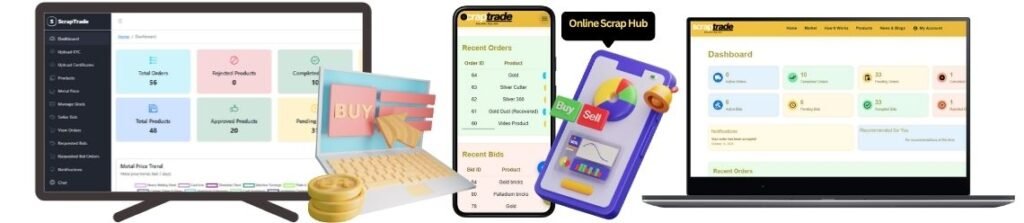
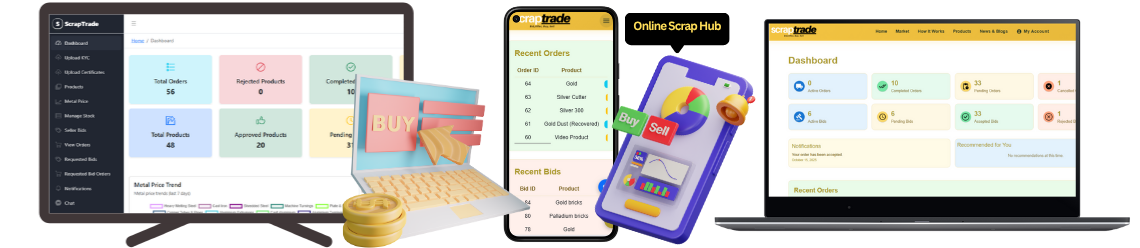
ScrapTrade provides an online marketplace where scrap businesses can list materials and connect with potential trading partners, and the businesses using it range from single-site yards to agents who never take possession of anything at all.
The Yard Itself: Stock Control and Weighing
Stock control in practice means knowing not just what’s in the yard but where it is, what grade it’s been sorted to and how long it’s been there. Yards that struggle usually don’t have a data problem, they have a location problem, where material moves and nobody updates the record because there isn’t a quiet moment to do it.
Accuracy beats completeness every time. A record of half the loads that’s correct is always more useful than a record of all of them that’s approximately right.
Where to Go From Here
Records and software are tools, not a strategy. The strategy is still buying well, grading honestly and turning stock over, and all the tools do is make those three things visible. For yard-level systems rather than spreadsheets, the best scrap yard management software guide sets out the differences plainly.
The businesses that come out of this transition best are the ones that treated it as a process rather than a purchase. A spreadsheet kept honestly for another year beats a flashy system nobody uses, and there’s no shame in taking the slow route as long as the direction is right.
If your records are now telling you what’s available and what isn’t, ScrapTrade is worth a look, because online listings turn that information into trading opportunities.