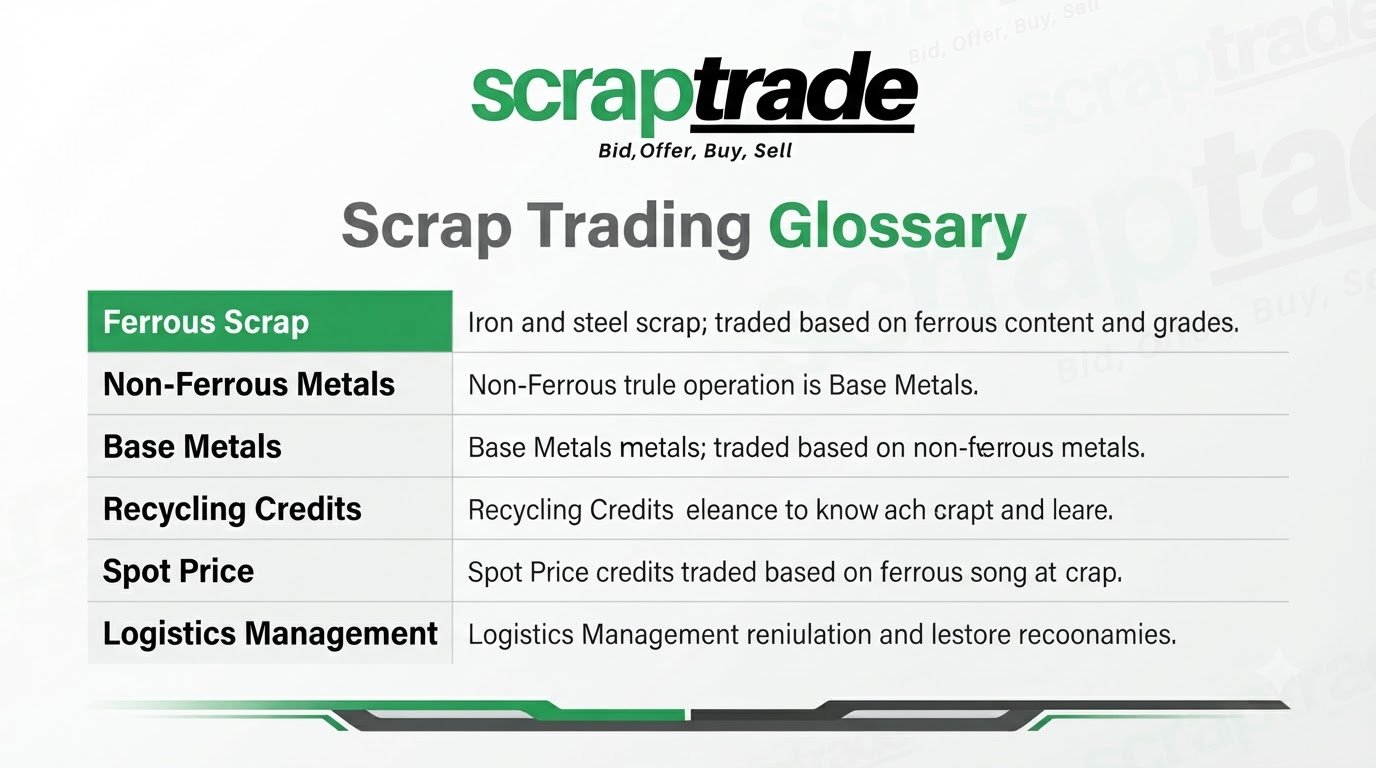
Starting a scrap metal business sounds daunting, but it’s genuinely one of the more approachable industries to get into if you know the basics. If you’re just getting to grips with how this industry works, the scrap trading glossary is a handy reference to keep close by.
It’s worth saying up front that this isn’t a get-rich-quick industry. The people who do well in scrap tend to be the ones who treat it as a proper business, keep decent records, and build up their knowledge one load at a time. That’s a slower path than some, but it’s a far more reliable one. When you come across terms you don’t recognise, the scrap trading glossary is worth a look.
How the Scrap Industry Fits Together
The scrap industry is really a chain of people, each adding a bit of value as material moves along it. Collectors gather it, dealers buy and consolidate it, yards sort and process it, and recyclers or manufacturers eventually turn it back into usable metal. Understanding where you sit in that chain is the first real decision you make.
What surprises most newcomers is how much of the industry runs on relationships rather than contracts alone. A factory that generates scrap every week wants someone reliable to take it away, and a buyer wants material they can trust. Being the person who bridges those two reliably is a perfectly good business in itself.
What You Actually Need to Start
A common mistake is assuming you need a yard full of equipment before you’ve made your first dollar. Plenty of people start by collecting from a handful of local businesses, building up a regular supply, and only then investing in the gear that makes sense for the volume they’re actually doing.
Then there’s the paperwork side. Registering a business, understanding what licences apply in your state, and keeping proper records of weights and transactions aren’t optional extras — they’re part of operating legally, and getting them right from day one saves a lot of trouble later.
Finding Material to Sell
Scrap comes from everywhere, which is what makes supply such an approachable problem. Workshops produce offcuts, construction sites produce offcuts and demolition material, households clear out old appliances, and factories produce the same offcuts week after week. Each of those is a potential supply source with its own rhythm.
Approaching those businesses is less awkward than people expect. Most are quietly pleased to have someone take material away reliably, and many are already paying someone to do it. Turning up on time, being straightforward about what you can take, and following through is enough to start conversations that turn into regular arrangements.
Finding Someone to Buy It
The key thing to understand is that buyers aren’t all the same. A local yard wants clean sorted metal and easy handling; an exporter wants container loads of a single grade; a manufacturer wants consistent secondary material delivered on a schedule. Each of them values your scrap differently, and knowing who you’re really selling to shapes everything else.
Repeat business is where the money actually is. A buyer who knows your loads are clean, your weights are honest, and you deliver when you say you will pay better over time than a buyer you’re constantly renegotiating with. Reputation in this industry travels further than advertising does.
The Language You Need to Know
Every industry has its jargon, and scrap is no exception. Terms like MOQ, RFQ, gross weight, net weight, ferrous, non-ferrous, and grade get thrown around constantly, and not understanding them puts you at a real disadvantage when you’re negotiating or reading a buyer’s requirements.
If you take one thing away about the terminology, make it that knowing the language changes how seriously you’re taken. A supplier who can discuss grades, weights, and terms fluently comes across as a professional, and buyers respond to that. It also protects you, because you can’t be talked into a bad deal if you understand what’s actually being offered.
Where to Start
Starting out in scrap is less about having the right equipment and more about understanding how the pieces fit together, and the rest follows from there. For the terminology that comes up constantly in this trade, the scrap trading glossary is the reference most beginners find useful first.
Nobody gets all of this right on their first attempt, and that’s expected. The businesses that succeed are the ones that keep learning from each load, each buyer, and each mistake, rather than waiting until they understand everything before they begin.
There’s also something to be said for starting with a single material rather than trying to handle everything at once. Learning to recognise one grade well, finding a reliable buyer for it, and building a supply route that actually lasts is a genuine accomplishment. Once that first one is working properly, adding a second material is far easier, because the framework is already there and you’re not learning the basics at the same time as everything else.
Above all, keep your numbers honest. It’s very easy in the early days to focus on the price per tonne and conveniently forget the fuel, the hours, the deductions, and the waiting. The businesses that survive their first year are usually the ones that knew their real position even when it was uncomfortable, because you can’t fix a margin you haven’t measured.