Metal recycling is a dynamic industry where prices fluctuate frequently, and understanding these changes is essential for both scrap sellers and buyers. If you’re looking to buy scrap online or sell scrap online, being aware of the factors that influence metal prices can help you make smarter decisions and maximize profits.
Market Demand and Supply
One of the primary reasons metal recycling prices change is the balance of supply and demand. Metals like copper, aluminium, and steel are in high demand across industries such as construction, electronics, and manufacturing. When supply is limited or demand spikes, prices rise. Conversely, when there’s an oversupply or reduced demand, prices drop.
For example, global shortages in copper can cause copper scrap buyers to increase their bids, while surplus aluminium stock may lower prices for aluminium scrap suppliers.
Global Economic Factors
Global economic conditions heavily influence metal prices. Events like inflation, trade disputes, or currency fluctuations can affect the cost of raw materials. Additionally, international scrap markets play a role; changes in export-import policies or shipping costs impact local prices.
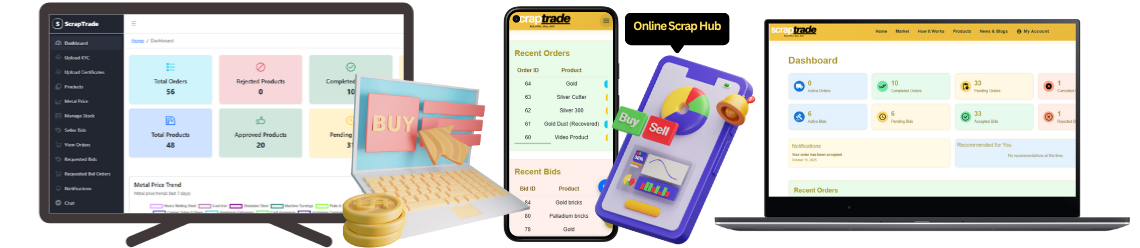
Using a scrap marketplace like ScrapTrade helps traders stay updated with live prices, ensuring secure scrap transactions at competitive rates.
Seasonal Trends
Certain metals experience seasonal demand. For instance, construction-related metals may see higher demand in summer months, affecting scrap steel prices. Similarly, electronic waste trading may increase after new tech product releases, influencing e-waste metal prices.
Technological Advancements
Recycling technology improvements can also impact prices. Efficient recycling reduces the cost of processing scrap metals, which can temporarily lower market prices. Conversely, higher energy costs or stricter environmental regulations may increase processing expenses, causing price adjustments.
Regulatory and Environmental Factors
Government regulations on recycling and waste management influence metal prices. Policies that restrict imports of scrap metals or impose higher environmental standards can reduce supply, pushing prices up. Staying informed about these regulations is vital for scrap buyers Australia and scrap sellers Australia operating in the market.
Market Speculation
Finally, speculation by traders and investors can create short-term price fluctuations. Predicting trends in metal demand, global manufacturing, or technological developments can drive sudden price changes.
How ScrapTrade Helps You Navigate Price Changes
ScrapTrade is a trusted scrap trading platform where verified scrap dealers can monitor price trends in real-time. Features like live market analytics, buyer-seller matching, and integrated logistics support make it easier to buy scrap online or sell scrap online without worrying about unpredictable price swings.
By using ScrapTrade, you can:
- Access live metal prices and historical trends
- Connect with verified scrap buyers Australia or scrap sellers Australia
- Ensure secure scrap transactions with escrow-protected payments
- Get insights for profitable trading decisions
Understanding why metal recycling prices change is key to making informed decisions in scrap trading. With the right tools and a reliable scrap marketplace, you can stay ahead of market trends and optimize your profits.
Internal Links Suggestions: