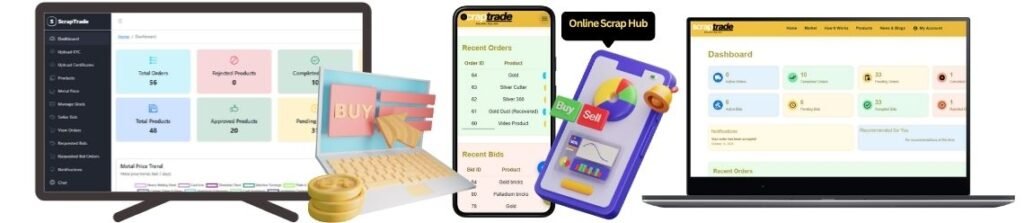
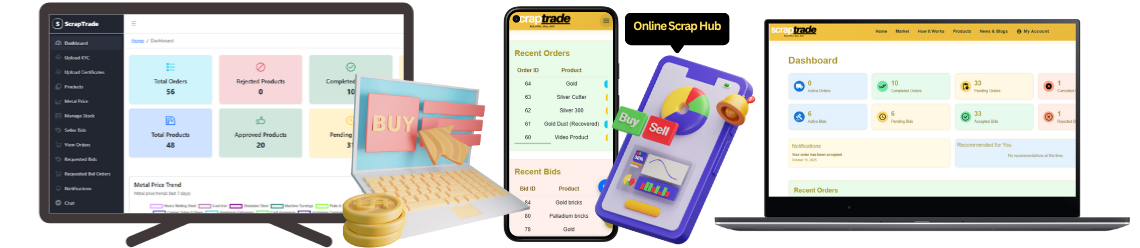
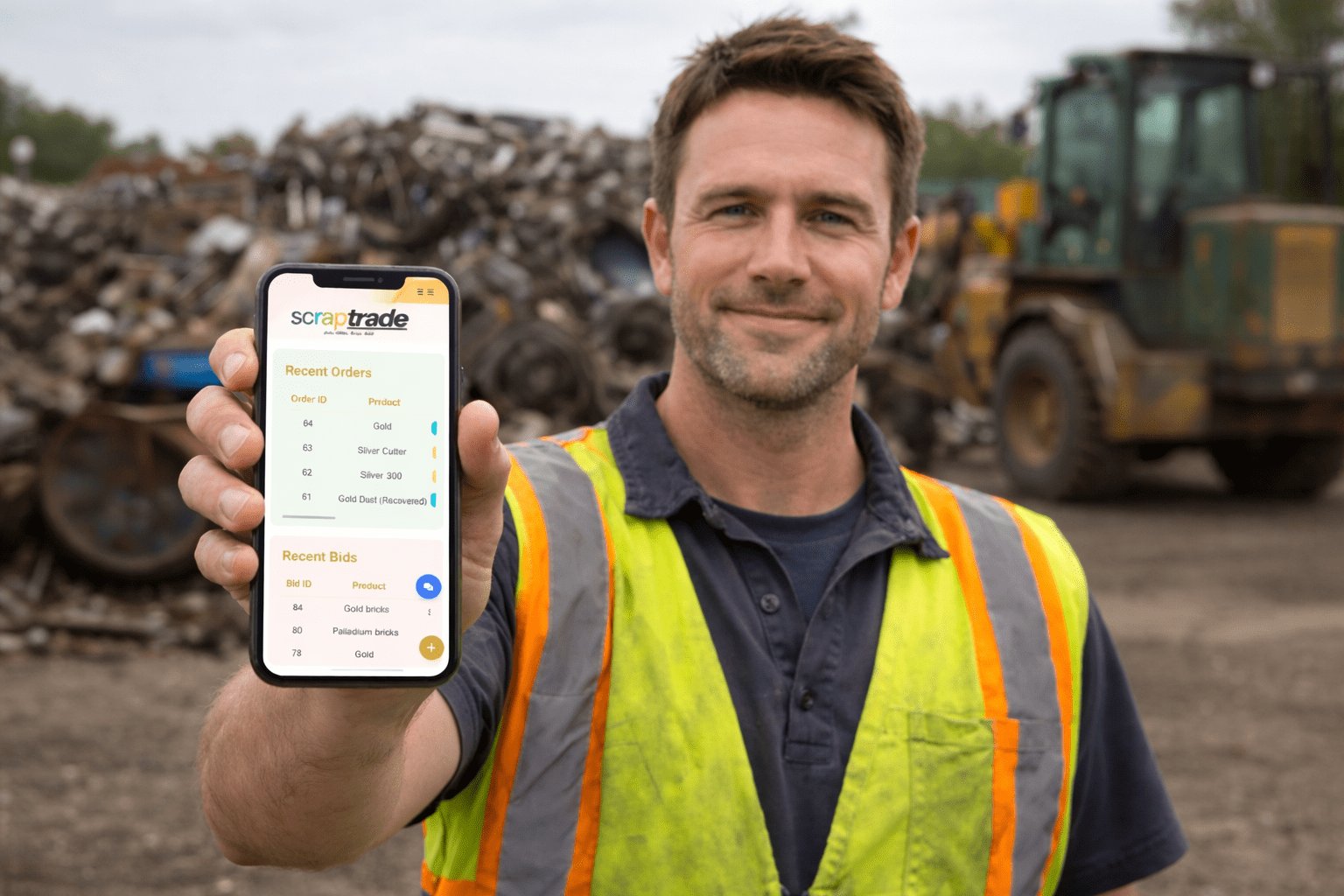
Turn Scrap Metal into Cash: Buy, Sell, and Profit from Australia’s Leading Digital Scrap Marketplace
Making money with scrap metal has never been easier, more accessible, or more profitable. connects you with thousands of verified buyers and sellers across the nation and internationally, providing the digital tools, market intelligence, and secure platform you need to generate significant income from scrap metal trading—whether you’re looking for extra cash, building a full-time business, or scaling an existing operation.
This comprehensive guide reveals exactly how to make money with Scrap Trade through multiple proven strategies for Scrap Trading Online: selling your scrap for top dollar, buying and reselling for profit, offering scrap pickup services, trading full-time, and leveraging platform features for maximum earnings.
Understanding the Scrap Money-Making Opportunity
The Australian scrap metal industry processes millions of tonnes annually worth billions of dollars. Every piece of metal has value – from old car parts and construction waste to industrial offcuts and household items. The challenge has always been connecting people with scrap to buyers willing to pay fair prices.
Scrap Trade solves this problem by creating Australia’s most comprehensive digital scrap marketplace where:
- Sellers get competitive prices from multiple buyers instead of accepting whatever one local yard offers
- Buyers access diverse suppliers at competitive rates with complete transparency
- Traders arbitrage between markets, buying low and selling high
- Service providers offer scrap collection, processing, and logistics
- Everyone benefits from transparent pricing, verified transactions, and efficient digital processes
The money-making potential is substantial when you understand how to leverage platform capabilities strategically.
Strategy 1: Sell Your Scrap for Maximum Cash
What Scrap Can You Sell?
Almost any metal item has value on Scrap Trade:
Household Scrap
- Old appliances (refrigerators, washing machines, dryers, ovens)
- Cookware and kitchen items (pots, pans, utensils)
- Plumbing fixtures (copper pipes, brass fittings, old radiators)
- Electronic waste (computers, phones, cables, chargers)
- Garden equipment (lawn mowers, tools, metal furniture)
- Car parts (batteries, wheels, engines, catalytic converters)
- Building materials (window frames, roofing, gutters, fencing)
Business and Industrial Scrap
- Manufacturing offcuts and production waste
- Demolished building materials (steel beams, rebar, metal roofing)
- Old machinery and equipment
- Office electronics (servers, computers, networking equipment)
- Retail fixtures and shelving
- Restaurant equipment (stainless steel appliances, cookware)
- Automotive workshop waste (parts, fluids containers, tools)
Construction and Demolition Scrap
- Structural steel from demolitions
- Rebar and reinforcement materials
- Copper wiring and electrical components
- Aluminum window frames and doors
- Steel roofing and cladding
- Metal pipes and plumbing materials
- HVAC units and ductwork
How to Maximize Your Selling Profits
1. Sort and Separate Materials
Mixed scrap fetches the lowest prices. Separated metals command significant premiums:
- Separate ferrous from non-ferrous metals – Steel and iron (magnetic) separate from aluminum, copper, brass (non-magnetic)
- Sort by metal type – Don’t mix aluminum with copper or brass with stainless steel
- Grade your materials – Clean copper wire worth 30-50% more than insulated wire
- Remove contamination – Steel scrap without plastic, wood, or rubber attachments gets better prices
Example: Mixed metal scrap might fetch $150/tonne while properly sorted yields:
- Clean steel: $450/tonne
- Aluminum: $2,200/tonne
- Copper: $9,000/tonne
- Brass: $6,500/tonne
The extra hour sorting can add hundreds or thousands of dollars to your return.
2. Know What You Have
Research your materials before listing:
- Identify metal types – Use a magnet (ferrous vs. non-ferrous) and visual identification
- Determine grades – Understand the difference between #1 and #2 copper, or UBC vs. mixed aluminum
- Check current prices – Use Scrap Trade’s pricing dashboards to see current market rates
- Calculate your value – Weigh materials and multiply by current prices to know expected returns
3. Create Compelling Listings
Professional listings generate more inquiries and higher prices:
- Take clear photos – Show materials from multiple angles in good lighting
- Write accurate descriptions – Specify metal type, approximate weight, form (baled, loose, cut), and contamination levels
- Be honest about quality – Accurate descriptions prevent disputes and build reputation
- List quantities clearly – State total weight or number of items available
- Specify location and pickup terms – Let buyers know where materials are and if you offer delivery
4. Price Competitively Using Market Data
Scrap Trade’s real-time pricing intelligence shows you exactly what materials are worth:
- Check recent transactions – See what similar materials actually sold for
- Review current listings – Understand what competitors are asking
- Consider your location – Sydney prices might differ from Perth or Brisbane
- Factor in competition – If lots of similar materials are listed, price more competitively
- Allow room for negotiation – List slightly above your minimum acceptable price
5. Respond Quickly to Inquiries
Fast, professional communication wins sales:
- Reply within hours, not days – Buyers contact multiple sellers; first responders often win
- Answer questions thoroughly – Provide requested information and additional photos promptly
- Be professional – Courteous, clear communication builds trust and reputation
- Negotiate reasonably – Consider fair offers even slightly below asking price
6. Build Your Seller Reputation
Strong reputation translates to higher prices:
- Deliver materials as described – Accurate listings prevent negative reviews
- Communicate delivery timing – Keep buyers informed about pickup or delivery schedules
- Package or prepare materials properly – Make buyer’s job easy
- Request feedback – Positive reviews attract future buyers willing to pay premium prices
Real Money Examples: What You Can Earn
Small-Scale (Household Clean-Out)
- Old copper pipes and wiring (20kg): $180-200
- Aluminum window frames (30kg): $65-75
- Stainless steel appliances (100kg): $150-180
- Car battery: $20-35
- Catalytic converter: $150-800 depending on type Total: $565-1,290 from one household clean-out
Medium-Scale (Renovation Project)
- Structural steel (500kg): $225-250
- Copper wiring and pipes (50kg): $450-500
- Aluminum doors and frames (100kg): $220-240
- Brass fixtures (10kg): $65-75
- Stainless steel (50kg): $75-90 Total: $1,035-1,155 from renovation waste
Large-Scale (Demolition Site)
- Steel beams and rebar (10 tonnes): $4,500-5,000
- Copper wiring (200kg): $1,800-2,000
- Aluminum (500kg): $1,100-1,200
- Mixed metals (2 tonnes): $300-400 Total: $7,700-8,600 from one demolition project
These are conservative estimates. Actual earnings depend on material types, grades, quantities, and current market prices.
Strategy 2: Buy and Resell Scrap for Profit
The Scrap Trading Business Model
Buy scrap at below-market prices and resell at market rates, capturing the price difference as profit. Scrap Trade makes this accessible by:
- Showing you market prices – Know exactly what materials are worth
- Connecting you with sellers – Find people selling below market value
- Providing buyer access – Reach processors and exporters paying top prices
- Handling logistics – Coordinate pickups and deliveries digitally
Where to Source Below-Market Scrap
1. General Public (Uninformed Sellers)
Many people don’t know scrap values and accept quick, easy sales:
- Garage sales and estate sales – Old tools, appliances, car parts sold cheap
- Online classifieds – Facebook Marketplace, Gumtree listings of “free metal” or “cheap scrap”
- Hard rubbish collections – Legal collection of council hard waste (check local regulations)
- Home renovators – People paying to remove renovation waste who’ll give it to you free
- Businesses upgrading equipment – Old machinery, office electronics, retail fixtures
Strategy: Offer quick removal and modest cash payments. People happy to get $50 for metal you’ll resell for $300.
2. Small Businesses Without Scrap Programs
- Auto repair shops – Used parts, catalytic converters, batteries
- Plumbers and electricians – Copper pipes, brass fittings, cable offcuts
- HVAC contractors – Aluminum coils, copper tubing, old units
- Builders – Steel, aluminum, copper from construction sites
- Restaurants – Stainless steel equipment, kitchen appliances
Strategy: Offer regular pickup service. They get convenient waste removal; you get free or cheap scrap.
3. Platform Sellers Needing Quick Sales
Monitor Scrap Trade for sellers pricing below market:
- Urgent sellers – Needing immediate cash or clearing space quickly
- Uninformed sellers – Not checking current market rates
- Small quantity sellers – Pricing low because they think quantities don’t matter
- Remote sellers – Geographic isolation reduces their buyer access
Strategy: Act fast on underpriced listings. Buy immediately and relist at market rates.
4. Bulk Purchases at Discount
- Buy large quantities – Sellers discount for volume purchases
- Purchase mixed or contaminated materials – Buy cheap, sort and clean, resell at premium
- Acquire partial lots – Sellers wanting to clear entire inventory might discount
Profitable Trading Strategies
Strategy A: Quick Flipping
Buy and immediately relist on Scrap Trade at market prices:
- Monitor platform daily for below-market listings
- Purchase underpriced materials quickly
- Relist immediately at competitive market rates
- Capture 15-30% margin with minimal holding time
Example:
- Buy 500kg aluminum at $1,800/tonne ($900 total)
- Relist at $2,200/tonne ($1,100 for 500kg)
- Net profit: $200 (22% margin) in days or weeks
Strategy B: Accumulation and Consolidation
Buy small lots, consolidate, sell in bulk at premium prices:
- Purchase multiple small quantities over time
- Consolidate into larger lots (full tonne or container loads)
- Attract larger buyers who pay better prices for volume
- Achieve better margins through economies of scale
Example:
- Buy 10 lots of 50kg copper at $8,500/tonne average ($4,250 total)
- Consolidate to 500kg
- Sell bulk 500kg to processor at $9,200/tonne ($4,600 total)
- Net profit: $350 (8% margin) plus volume efficiency gains
Strategy C: Geographic Arbitrage
Buy in low-price regions, sell in high-price markets:
- Monitor regional price differences on platform
- Buy materials in oversupplied or remote areas
- Sell to buyers in undersupplied or urban areas
- Profit from price differential minus transport costs
Example:
- Buy aluminum in regional Queensland at $2,000/tonne
- Sell to Melbourne buyer at $2,300/tonne
- Transport cost: $120/tonne
- Net profit: $180/tonne (9% margin)
Strategy D: Processing and Value-Adding
Buy low-grade materials, process to higher grades, sell at premium:
- Purchase insulated copper wire at $3,500/tonne
- Strip insulation yielding 60% bare bright copper
- Sell bare bright at $9,500/tonne
- Capture processing margin
Example:
- Buy 1 tonne insulated wire: $3,500
- Strip to 600kg bare bright copper
- Sell at $9,500/tonne: $5,700
- Processing cost (labor, equipment): $500
- Net profit: $1,700 (48% margin)
Strategy E: International Export
Buy domestically, export to premium international markets:
- Source materials from Australian sellers
- Consolidate container loads
- Export to Asian, Middle Eastern, or other buyers
- Capture international price premium
Example:
- Buy stainless steel scrap domestically at $1,800/tonne
- Export to South Korea at $2,200/tonne
- Shipping and fees: $250/tonne
- Net profit: $150/tonne (8% margin) on 20-tonne containers = $3,000 per container
Money Management for Trading
Start Small and Scale
- Initial capital: $500-2,000 – Buy small quantities learning the business
- Reinvest profits – Use earnings to fund larger purchases
- Scale gradually – Increase purchase sizes as experience and capital grow
- Target 20-30% monthly returns – Conservative trading achieves this consistently
Example Growth Trajectory:
Month 1: $1,000 capital, 25% returns = $250 profit (now $1,250 total) Month 2: $1,250 capital, 25% returns = $312 profit (now $1,562 total) Month 3: $1,562 capital, 25% returns = $390 profit (now $1,952 total) Month 6: Approximately $3,815 total capital (4x original investment) Month 12: Approximately $14,551 total capital (14x original investment)
These numbers assume reinvesting all profits. Even modest monthly returns compound dramatically over time.
Managing Risks
- Start with familiar materials – Learn one metal type thoroughly before diversifying
- Verify quality before buying – Request photos, samples, or inspections for significant purchases
- Calculate all costs – Include transport, processing, storage, and platform fees in margin calculations
- Maintain cash reserves – Don’t tie up all capital; keep 20-30% liquid for opportunities
- Build reputation carefully – One bad transaction damages ratings affecting future business
Strategy 3: Offer Scrap Pickup Services
The Scrap Collection Business
Many people and businesses have scrap metal but lack transport, time, or knowledge to sell it. Offering pickup services creates win-win situations:
- Customers get convenient removal, fair prices, and professional service
- You acquire scrap at below-market prices or free, then resell via Scrap Trade
Setting Up Your Pickup Service
Equipment Needed:
Minimal Setup (Under $5,000):
- Utility vehicle or trailer (rent or own)
- Basic tools (bolt cutters, wrenches, cutting tools)
- Scales for weighing materials
- Safety equipment (gloves, boots, eye protection)
- Business cards and marketing materials
Professional Setup ($5,000-20,000):
- Truck or ute with larger capacity
- Trailer for oversized items
- Power tools (angle grinder, reciprocating saw)
- Magnet for ferrous/non-ferrous sorting
- Smartphone with Scrap Trade app for mobile listing
- Business insurance and licensing
Service Offerings:
- Free Pickup – You collect scrap at no charge, keeping all material value
- Paid Pickup – Charge removal fee for difficult/large items, keep materials
- Cash for Scrap – Pay customers 50-70% market value, profit from reselling
- Same-Day Service – Premium pricing for urgent removals
- Demolition Assistance – Help dismantle structures, keep scrap materials
- Business Partnerships – Regular pickups from contractors, manufacturers, etc.
Marketing Your Pickup Service
Online Presence:
- List services on Scrap Trade as scrap buyer
- Facebook business page targeting local area
- Google My Business listing
- Gumtree and local classifieds ads
- Local community Facebook groups
Traditional Marketing:
- Letterbox drops in target suburbs
- Business cards at hardware stores, transfer stations
- Networking with builders, plumbers, electricians
- Vehicle signage advertising services
- Word-of-mouth from satisfied customers
Service Area Strategy:
- Start with 10-15km radius from base
- Expand as business grows and routes optimize
- Charge distance fees for remote pickups
- Schedule routes efficiently minimizing drive time
Pricing Your Services
Free Pickup Model: Materials where value exceeds collection costs:
- Copper, brass, stainless steel (high value justifies free collection)
- Large quantities of any metal (volume justifies effort)
- Convenient locations (minimal travel time/cost)
Paid Pickup Model: Charge collection fees when:
- Low-value materials (steel, iron) in small quantities
- Difficult removals requiring extra labor or equipment
- Remote locations with high transport costs
- Demolition or dismantling work needed
Typical charges: $50-200 depending on difficulty, location, and time required
Cash for Scrap Model: Offer 50-70% of market value:
- Copper: Pay $6,000-7,000/tonne (market $9,000)
- Aluminum: Pay $1,400-1,800/tonne (market $2,200)
- Brass: Pay $4,500-5,500/tonne (market $6,500)
Customers get convenience and fair price; you profit from reselling at full market rates.
Revenue Examples
Part-Time (10 hours/week):
- 5 free pickups weekly averaging 100kg mixed metals: $300-400/week
- 3 paid pickups at $75 average: $225/week
- 2 cash-for-scrap deals netting $150 profit: $300/week Total: $825-925/week = $3,300-3,700/month part-time
Full-Time (40 hours/week):
- 20 free pickups weekly averaging 150kg mixed metals: $1,800-2,200/week
- 10 paid pickups at $100 average: $1,000/week
- 8 cash-for-scrap deals netting $200 profit: $1,600/week Total: $4,400-4,800/week = $17,600-19,200/month full-time
These are realistic estimates for established pickup services in metropolitan areas.
Strategy 4: Build a Full-Time Scrap Trading Business
Transitioning from Side Income to Full-Time Business
When scrap activities generate consistent monthly income exceeding living expenses, full-time operation becomes viable.
Signs You’re Ready:
- Consistently earning $4,000+ monthly from scrap activities
- Have 6+ months business experience and market knowledge
- Built strong platform reputation (4.5+ star rating, 50+ transactions)
- Established reliable supply sources and buyer relationships
- Understand operational requirements and costs
Full-Time Business Models
Model 1: Scrap Yard Operator
Establish physical location where people bring scrap:
- Lease yard space with vehicle access
- Install scales for accurate weighing
- Provide bins for different material types
- Offer competitive cash prices
- Resell via Scrap Trade to processors and exporters
Investment: $20,000-100,000 depending on scale Potential Revenue: $150,000-500,000+ annually
Model 2: Mobile Scrap Trader
Operate without fixed premises:
- Purchase truck and equipment
- Offer pickup services territory-wide
- Buy from public and small businesses
- Sell via Scrap Trade to highest bidders
- Minimize overhead, maximize flexibility
Investment: $15,000-50,000 Potential Revenue: $80,000-200,000+ annually
Model 3: Specialty Scrap Processor
Focus on specific high-value materials:
- Electronic scrap dismantling and precious metal recovery
- Catalytic converter processing
- Industrial equipment dismantling
- Copper wire processing and separation
- Stainless steel sorting and grading
Investment: $30,000-150,000 depending on specialty Potential Revenue: $120,000-400,000+ annually
Model 4: Export Trading
Buy domestically, export internationally:
- Consolidate container loads from multiple sources
- Develop relationships with international processors
- Handle export documentation and logistics
- Capture international price premiums
- Scale through increasing container volumes
Investment: $50,000-200,000 (working capital for containers) Potential Revenue: $200,000-1,000,000+ annually
Model 5: Platform Arbitrage Trader
Pure digital trading without physical handling:
- Monitor platform daily for arbitrage opportunities
- Buy underpriced listings, resell at market rates
- Arrange direct seller-to-buyer transport
- Profit from price spreads and geographic arbitrage
- Operate entirely digitally with minimal overhead
Investment: $5,000-30,000 (trading capital) Potential Revenue: $60,000-150,000+ annually
Operational Considerations
Legal and Regulatory:
- Business registration (ABN, company structure)
- Required licenses (scrap dealer license in some states)
- Environmental permits for processing operations
- Occupational health and safety compliance
- Insurance (public liability, workers compensation if employees)
Financial Management:
- Separate business and personal finances
- Accounting software tracking income and expenses
- Quarterly BAS/GST reporting
- Annual tax returns and optimization
- Cash flow management for working capital
Scaling Strategies:
- Hire labor for collection and processing
- Invest in equipment improving efficiency
- Develop specialized expertise in high-margin materials
- Build long-term supply contracts with businesses
- Establish buyer relationships for consistent outlets
Strategy 5: Leverage Platform Features for Maximum Earnings
Advanced Money-Making Techniques
1. Price Alerts and Timing
Set up automated alerts for price movements:
- Buy when prices dip below averages
- Sell when prices spike above norms
- Hold inventory through price troughs
- Liquidate during price peaks
Example: Copper drops from $9,200 to $8,700/tonne. Alert triggers. Buy 2 tonnes at low price. Sell two weeks later at $9,400/tonne recovery. Profit: $700/tonne × 2 tonnes = $1,400 from timing alone.
2. Bulk Buying Discounts
Negotiate better prices for volume:
- Offer to purchase seller’s entire inventory
- Request 10-15% discount for bulk purchase
- Resell in smaller lots at standard prices
- Capture volume discount as margin
Example: Seller has 5 tonnes aluminum at $2,200/tonne ($11,000 total). Offer $10,000 for entire lot (9% discount). Resell in 500kg lots at $2,200/tonne. Profit: $1,000 from volume advantage.
3. Long-Term Contracts
Establish recurring revenue:
- Secure monthly purchase contracts with businesses
- Agree pricing formulas based on market indices
- Guarantee volumes providing income predictability
- Build stable business around contracted flows
Example: Monthly contract with manufacturer for 2 tonnes aluminum offcuts at Scrap Trade Index minus $100/tonne. Resell at Index price. Guaranteed $200/month margin plus volume consistency.
4. Value-Added Services
Charge for services beyond simple trading:
- Demolition and site cleanup ($500-5,000 per project)
- Equipment dismantling ($200-1,000 per item)
- Certificate of destruction for compliant disposal ($50-200 per certificate)
- Sorting and processing for sellers ($100-300 per tonne)
- Logistics coordination and freight arrangement ($150-500 per service)
These services generate income beyond material margins, often with higher profitability.
5. Referral and Network Building
Generate passive income through connections:
- Refer sellers to processors for finder’s fees
- Connect buyers with specialized suppliers for commissions
- Build network of contractors sending you opportunities
- Create referral partnerships with complementary businesses
Example: Refer demolition contractor to processor for ongoing steel sales. Receive 2% of transaction values as ongoing referral income. $500,000 annual referral volume = $10,000 passive income.
6. Seasonal Opportunities
Capitalize on predictable patterns:
- Construction scrap peaks in spring/summer
- Renovation scrap increases in spring
- Holiday electronic waste surges in January
- Business equipment upgrades in June/December (financial year ends)
Prepare for seasonal peaks with capital, storage, and marketing targeting these periods.
7. Niche Specialization
Develop expertise in high-margin niches:
- Catalytic converters: $150-800 per unit, high margins with knowledge
- Electronic scrap: Circuit boards, hard drives, precious metal recovery
- Specialty alloys: Titanium, nickel alloys, aerospace materials
- Industrial equipment: Specialized machinery dismantling and separation
- Automotive cores: Engines, transmissions, differentials for rebuilders
Specialized knowledge commands premium prices buyers and sellers willingly pay.
Real Success Stories: Making Money with Scrap Trade
Part-Timer Generates $1,500+ Monthly Side Income
James in Brisbane started collecting free scrap from Facebook Marketplace listings. Two evenings weekly and Saturday mornings, he collects appliances, car parts, and renovation waste. After sorting and listing on Scrap Trade, he consistently earns $1,500-2,000 monthly alongside his full-time job. Annual side income: $18,000-24,000.
Full-Time Trader Builds $180,000 Annual Business
Sarah quit her office job to trade scrap full-time. She specializes in buying mixed metals from small businesses and homeowners, sorting to higher grades, and reselling via Scrap Trade. Processing 30-40 tonnes monthly with average $150/tonne margin generates $4,500-6,000 monthly profit. After expenses: $180,000 annual income.
Pickup Service Scales to $250,000 Revenue
Michael started a scrap pickup service with a rented trailer. Within 18 months, he owned two trucks, hired two employees, and processes 150+ tonnes monthly. Combining collection fees, material resale via Scrap Trade, and demolition services generates $250,000 annual revenue with $85,000 personal income after costs.
Export Trader Achieves $450,000 First Year
Linda identified price premiums in Asian markets for Australian stainless steel scrap. She consolidates materials from multiple Scrap Trade sellers, exports 3-4 containers monthly, and captures international price spreads. First-year revenue: $450,000 with margins exceeding $100,000 after costs.
These are real patterns observed across successful Scrap Trade participants (names changed for privacy).
Getting Started: Your Money-Making Action Plan
Week 1: Setup and Education
Day 1-2: Platform Registration
- Create free Scrap Trade account at scraptrade.com.au
- Complete business verification
- Build comprehensive profile
- Explore marketplace and pricing data
Day 3-4: Market Research
- Study pricing for materials you can access
- Identify high-value materials in your area
- Research local competitors and pricing
- Understand grading and quality standards
Day 5-7: First Listings or Purchases
- List any scrap you currently have
- Or make first small purchase to learn process
- Practice photography and descriptions
- Engage with buyer or seller inquiries
Week 2-4: Building Momentum
- Increase listing or buying activity
- Develop routine for sourcing scrap
- Build relationships with regular buyers/sellers
- Track all transactions and calculate profits
- Refine pricing and negotiation strategies
- Gather positive reviews building reputation
Month 2-3: Scaling Operations
- Increase capital deployed in trading
- Expand material categories handled
- Develop efficient pickup or processing routines
- Invest in basic equipment improving efficiency
- Set income goals and track progress
- Optimize operations based on data
Month 4-6: Business Development
- Establish regular supply or buyer relationships
- Consider business registration if significant income
- Develop specialized knowledge in profitable niches
- Explore advanced strategies (export, contracts, services)
- Reinvest profits in growth
- Plan potential full-time transition if desired
Money-Making Tips and Best Practices
Maximize Every Transaction
- Always weigh materials accurately
- Photograph from multiple angles
- Respond to inquiries within 2-3 hours
- Negotiate professionally and fairly
- Request buyer/seller feedback
- Learn from each transaction
Build Sustainable Business
- Focus on reputation, not just quick profits
- Deliver materials as described
- Communicate proactively
- Honor commitments completely
- Develop long-term relationships
- Reinvest in business growth
Continuous Learning
- Study materials you don’t know
- Learn grading standards
- Understand market drivers
- Follow global commodity trends
- Network with other traders
- Stay updated on regulations
Manage Risks Prudently
- Start small and scale gradually
- Verify quality before large purchases
- Maintain cash reserves
- Diversify materials and partners
- Document all agreements
- Get proper insurance when scaling
Leverage Technology
- Use Scrap Trade mobile app
- Set up price alerts
- Track performance analytics
- Automate repetitive tasks
- Integrate with your systems
- Stay active on platform
Common Questions About Making Money with Scrap Trade
How much money can I really make?
Income depends on time invested and capital deployed:
- Casual (5 hours/week): $500-1,500/month
- Part-time (15 hours/week): $2,000-4,000/month
- Full-time (40 hours/week): $6,000-15,000+/month
These are realistic ranges for dedicated participants. Higher earnings require specialized knowledge, capital, or established operations.
Do I need money to start?
You can start with zero capital by:
- Collecting free scrap and selling it
- Offering free pickup services
- Working on commission connecting buyers/sellers
Capital accelerates growth but isn’t mandatory for starting.
How quickly will I make money?
Most sellers receive payment within 1-4 weeks of listing materials. Traders can flip materials in days for quick returns. Pickup services generate cash on collection. Speed depends on strategy and market conditions.
What’s the best material to focus on?
For beginners:
- Copper – High value, easy to identify, strong demand
- Aluminum – Abundant availability, good margins
- Stainless steel – Premium pricing, less competition
For experienced:
- Electronics – High margins require knowledge
- Catalytic converters – Excellent margins with expertise
- Specialty alloys – Premium prices for rare materials
Do I need special licenses or permits?
Most small-scale scrap trading requires only:
- ABN (Australian Business Number) for business operations
- Basic business registration
Large-scale operations may need:
- Scrap dealer license (requirements vary by state)
- Environmental permits for processing
- Transport and waste licenses for certain activities
Check your state regulations for specific requirements.
Is this legal and legitimate?
Yes, scrap metal trading is completely legal. Scrap Trade operates as a registered Australian business (ABN: 49 693 656 932). Always:
- Verify ownership before accepting materials
- Avoid stolen goods (if deal seems too good, it probably is)
- Comply with environmental regulations
- Report income for tax purposes
- Follow state-specific scrap dealer laws
Start Making Money with Scrap Trade Today
The opportunity is real, the platform is ready, and thousands of Australians are already earning significant income through scrap metal trading. Whether you’re looking for extra cash, building a side business, or creating a full-time livelihood, Scrap Trade provides the marketplace, tools, and support to succeed.
Every day you wait is money left on the table. Someone in your area is throwing away valuable scrap. Businesses are paying for scrap removal when they could sell it. Traders are capturing margins you could be earning.
The time to start is now.
Create Your Free Scrap Trade Account
Visit: scraptrade.com.au
Contact us for guidance:
- General Questions: info@scraptrade.com.au
- Account Setup: admin@scraptrade.com.au
- Customer Support: cs@scraptrade.com.au
- Technical Help: techsupport@scraptrade.com.au
Join thousands of Australians making money with scrap metal through Australia’s leading digital scrap marketplace. Your profitable scrap trading journey starts today.
Scrap Trade Online is operated by MOBEIUS TECHNOLOGIES PTY LTD (ABN: 49 693 656 932, ACN: 693 656 932), an Australian-registered company providing the digital infrastructure for profitable, transparent scrap metal trading across Australia and internationally through 145+ domains in 12+ countries.