International scrap metal trading looks deceptively simple from the outside collect, sell, ship, repeat. Anyone who has dealt with customs, environmental agencies, or cross-border logistics knows the reality is much more… crunchy. Scrap moves across borders under strict rules because it sits at the intersection of waste, resource, and environmental management.
A traditional scrap dealer might recall a time when paperwork was lighter and handshake deals ruled. Today, digital documentation and compliance tracking are essential for keeping shipments legal and avoiding expensive delays. This shift is precisely why online platforms like ScrapTrade are becoming the industry’s new compass.
Let’s explore the key licenses and permits required to trade scrap legally on the global stage.
1. Export License (Mandatory in Most Countries)
Most governments classify scrap metals and e-waste as “controlled commodities.” Exporters often need:
- A General Export License, covering metals like copper, aluminium, brass, steel.
- A Restricted Goods License, required for certain grades or hazardous scrap.
Australia, India, the United States, and the EU all require exporters to register with customs and declare material type, grade, and volume.
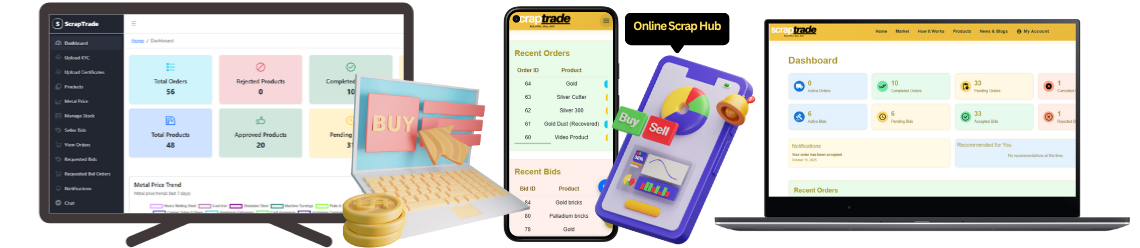
Using a digital scrap marketplace like ScrapTrade ensures all buyer-seller data is recorded, making export documentation fast and transparent.
2. Environmental Compliance Certificates
Scrap is tightly regulated under environmental protection frameworks.
Depending on the country, exporters may need:
- Environmental Protection Agency (EPA) clearance
- Waste Management Authority permits
- Hazardous material handling certification
For example, exporting e-waste often requires proof that the material meets Basel Convention rules—a global treaty that restricts hazardous waste movement.
Platforms like ScrapTrade help sellers stay compliant by matching them with verified scrap buyers and providing digital logs for audits.
3. Import License (Required by Many Asian & Middle Eastern Markets)
Many countries—especially major scrap-import hubs—limit who can import material. Importers may need:
- Restricted Scrap Import License
- Pre-Shipment Inspection (PSI) Certificate
- Bureau of Standards clearance
- Proof of proper recycling facilities
Popular destinations like India, Vietnam, Malaysia, Turkey, and the UAE enforce tight quality controls.
ScrapTrade helps buyers compare sellers, grades, and certifications so they can stay within regulatory boundaries while sourcing securely.
4. Customs Registration & HS Code Compliance
Every shipment needs correct HS Codes (Harmonised System Codes). Misclassification leads to:
- Fines
- Delays
- Shipment seizure
Traders also need:
- Customs Importer/Exporter Code (IEC)
- Registration with national customs portals
ScrapTrade sellers can upload grade photos, certificates, and specs, helping customs officers process shipments more smoothly.
5. ISO Standards (Strongly Recommended)
While not always mandatory, ISO certifications enhance trust, especially for global buyers.
The most relevant are:
- ISO 14001 – Environmental management
- ISO 45001 – Occupational safety
- ISO 9001 – Quality management
ScrapTrade connects verified scrap dealers who often adhere to such standards, improving reliability across borders.
6. Transport & Warehouse Licenses
International scrap traders often require:
- Transporter License for Waste Materials
- Storage Permit for Recyclables
- Port Authority clearance
Some countries require GPS-equipped trucks or real-time reporting for scrap movement—another area where digital tools become essential.
7. Basel Convention Documentation (For E-Waste & Hazardous Scrap)
Electronic waste, lead-acid batteries, and certain metal sludges fall under Basel Convention controls.
Exporters must provide:
- Prior Inform Consent (PIC) documents
- Environmental impact statements
- Details of the receiving facility
ScrapTrade supports compliant e-waste trading by allowing only verified dealers.
Why ScrapTrade Makes Global Licensing Easier
ScrapTrade bridges traditional scrap trading values—trust, transparency, reliability with digital tools that simplify compliance.
By trading on ScrapTrade, you get:
- Verified buyers and sellers
- Digital documentation trails
- Faster cross-border approvals
- Escrow-protected payments
- A marketplace built for legal, transparent global trade
Explore how ScrapTrade supports both scrap buyers and scrap sellers:
→ https://scraptrade.com.au/how-it-works
Final Thoughts
Global scrap trading carries immense pportunity, but it is tied tightly to regulations that protect the environment and prevent illegal waste trafficking. With the right licenses in place and a trusted platform like ScrapTrade for digital transparency traders can expand globally without fear of compliance headaches.
ScrapTrade continues to modernise the industry so you can buy and sell scrap online with full confidence in both legality and efficiency.