Global B2B Scrap Metal Trade: Market Dynamics, Strategic Sourcing, and Regulatory Compliance
I. Executive Overview: Strategic Context and Global Market Imperatives
1.1. The Critical Role of Secondary Materials in the Decarbonized Economy
The global B2B scrap metal sector has transitioned from a localized waste management service to a cornerstone of the modern industrial supply chain, driven primarily by macroeconomic sustainability imperatives. This strategic shift is fundamentally altering trade flows and operational requirements worldwide.
Sustainability Mandates as a Demand Driver
The increasing global demand for recycled metal is directly linked to corporate mandates for sustainable operations, government incentives, and the implementation of Circular Economy models.1 B2B metal recycling is now an essential component of industrial waste strategies, serving to decrease landfill waste volumes, reduce pollution hazards, and lessen dependence on primary mining demands, thereby promoting overall environmental sustainability.2 This adoption of recycling practices offers a dual benefit: preserving landfill capacity while minimizing the detrimental environmental impacts associated with traditional waste disposal.2
Carbon Footprint Reduction and Competitive Advantage
Recycling scrap metal offers a powerful tool for lowering global industrial emissions. The use of recycled material replaces the significantly more energy-intensive production processes required for new, virgin metals, consequently reducing the carbon footprint of manufactured goods.2 For major industrial players, this process facilitates compliance with tightening emission regulations and demonstrates a tangible commitment to environmental responsibility. Furthermore, as the costs associated with extracting, processing, and transporting raw virgin materials continue to climb, recycled metal provides a crucial competitive advantage by offering a more cost-effective input source.1 The resultant lower greenhouse gas emissions contribute directly to global climate change mitigation efforts.2
The Bureau of International Recycling (BIR) positions the recycling industry as a strategic bridge, advocating for policy frameworks globally that actively facilitate, rather than constrain, the international movement of these secondary materials.3 The organization estimates that the total savings in annual carbon dioxide emissions achieved through global recycling activity surpasses 1 billion tonnes per year, emphasizing that sound regulation must support the free flow of these materials to maintain this environmental benefit.3
1.2. Global Market Valuation, Segmentation, and Growth Trajectory
The global scrap metal recycling market demonstrates significant and consistent economic viability, driven by broad industrial application and mandated sustainability goals.
Market Scale and Forecast
The global scrap metal recycling market size is estimated to be valued at USD 63.66 Billion in 2025 and is projected to reach USD 93.90 Billion by 2032.5 This substantial growth trajectory reflects a Compound Annual Growth Rate (CAGR) of 5.7% from 2025 through 2032, propelled by high metal usage in global infrastructure projects and the persistent industrial demand for sustainable, cost-effective raw materials.5
The robust expansion of the market, particularly the strong CAGR, confirms that scrap metal is viewed by purchasing organizations not merely as industrial waste requiring disposal, but as a strategic raw material demanding rigorous supply chain management, similar to virgin materials. This perspective is reinforced by the high volume of material originating from industrial sources.
Segmentation by Source and Metal Type
By source, the Industrial Scrap segment is expected to contribute a dominant 60% share of the total market volume in 2025.5 This concentration is due to the large, consistent volumes of high-quality metal waste generated routinely by heavy industries, manufacturing, and fabrication sectors.
In terms of material composition, the ferrous metals segment (iron and steel) commands the largest market share, forecast to account for 70.7% of the market in 2025.5 This dominance is attributed to the wide range of industrial applications and the abundance of iron and steel generated during manufacturing processes and at the end of product lifecycles. Non-ferrous metals, though representing a smaller volume share, typically command higher market value, with copper and aluminum being critically important, highly recycled commodities.7
Regional Dominance and Emerging Hubs
The Asia Pacific region currently dominates the global scrap metal recycling market, holding an estimated share of 41.2% in 2025.5 This leadership position is directly linked to rapid industrialization, expansive infrastructure development, and proactive government policies promoting recycling within the region.5
Although Asia Pacific holds the largest share, North America is noted for experiencing the fastest Compound Annual Growth Rate (CAGR) in the market during the forecast period.6 This accelerated growth is indicative of increasing domestic consumption and processing capacity within the region, even as the United States remains the single largest exporter globally. The overall profitability of the industry, therefore, is intrinsically linked to geopolitical stability and the regulatory harmony that facilitates the cross-border movement of these critical materials.3 Constant monitoring and engagement with global regulatory bodies are necessary to ensure that market barriers do not negate the cost-efficiency gains and environmental benefits inherent in global scrap trade.
II. Dynamics of Global Supply and Demand: Key Trade Flows and Commodity Profiles
Global B2B scrap metal trade is characterized by asymmetric supply and demand patterns, with certain regions acting as perennial exporters and others serving as major processing hubs, often dictated by stringent import regulations and technology adoption.
2.1. Ferrous Scrap Trade Flows and Export Constraints
Major Exporters and Importing Hubs
The global trade in ferrous scrap is dominated by a few key exporters. The United States maintains its position as the largest steel scrap exporter globally, shipping 14.9 million tonnes of material in 2024. This is followed by the United Kingdom (6.9m tonnes) and Japan (6.5m tonnes).8
Conversely, the largest global importers of steel scrap in 2023 were Türkiye, India, Italy, the United States, and Belgium.9 Türkiye is a particularly vital destination, relying heavily on bulk ferrous scrap imports—specifically Platts TSI Heavy Melting Scrap 1/2 80:20—sourced predominantly from the US, UK, Benelux, and Baltics.10
Trade Flow Diversification
The global market is experiencing significant shifts in consumption patterns. Despite the US retaining its title as the largest global exporter, its total steel scrap exports have declined annually for three consecutive years.8 This decline occurs concurrently with intensifying global demand for recycled materials driven by decarbonization efforts.9 The increasing importance of importers like Türkiye and India suggests a strategic diversification of global trade flows, moving away from previous centralized consumption models. This requires international sellers to establish and manage broader supply networks and adapt quickly to the specific logistics and regulatory requirements of multiple destination markets, confirming the BIR’s observation that new regional hubs are emerging in India, Southeast Asia, and the Middle East.3
2.2. Non-Ferrous Scrap: High-Value Streams and North American Dominance
Commodity Hierarchy and Volume
Non-ferrous scrap represents the high-value segment of the market, essential for specialized industrial applications. Copper scrap is the most heavily recycled non-ferrous metal, with over 42 million metric tons processed in 2023, critical for electrical and conductive systems. Aluminum scrap is the second most voluminous, reaching over 38 million metric tons in 2023, widely used in construction, automotive frames, and beverage cans.7 Lead and Zinc combined contributed over 22 million metric tons, and nickel scrap, primarily recovered from stainless steel and electronics, accounted for over 9 million metric tons.7
The explicit recognition of the “Growth of E-Waste Recycling” as a top trend 1 signals that this segment holds increasingly high strategic value. E-waste streams contain not only base metals like copper and aluminum but also critical and precious metals, requiring specialized separation and processing. Developing comprehensive capabilities in e-waste recycling will enable B2B operators to secure higher-margin inputs, aligning perfectly with sustainability commitments.
North American Supply and Asia-Bound Flows
North America acts as a major global sourcing hub for non-ferrous material, processing over 45 million metric tons of non-ferrous scrap metal in 2023.7 The United States contributes nearly 38 million metric tons of this volume, sourced extensively from construction waste, old automobiles, and electrical systems.
A vast amount of this material is directed eastward: the U.S. exported over 16 million metric tons to Asia, primarily serving manufacturing centers in India, South Korea, and Vietnam.7 China’s aluminum scrap imports, totaling approximately 1.7852 million metric tons in 2024, were sourced mainly from regional and distant markets, including Thailand, Japan, the UK, and Malaysia.11
2.3. Technological Integration for Sourcing and Quality Control
To meet the increasing demands for purity and compliance in key importing nations, suppliers must integrate advanced technological solutions into their processing workflows.
Precision Sorting and Analytical Verification
Technological advancements are revolutionizing the scrap metal industry by making recycling processes more efficient, accurate, and safe.1 Key among these are automated sorting systems, which leverage Artificial Intelligence (AI) and Machine Learning (ML) to automatically identify and separate different metal types with high precision.1
Furthermore, new analytical techniques are essential for verifying material composition prior to shipment. Techniques such as Laser-Induced Breakdown Spectroscopy (LIBS) and X-ray Fluorescence (XRF) allow for rapid and accurate analysis of metal purity and composition. This level of verification is crucial for meeting increasingly stringent import standards globally and ensuring the material qualifies as “recycled raw material” rather than subject to restrictive “solid waste” classification.1 The increased use of robotics and automation in processing facilities also facilitates the handling of heavy loads and improves safety margins in scrap yards.1
III. Pricing Benchmarks, Hedging, and Financial Risk Management
Effective global B2B trade in secondary metals requires sophisticated mechanisms for pricing, financial security, and risk mitigation to navigate the inherent price volatility and logistical complexity of the sector.
3.1. Overview of Global Pricing Mechanisms and Benchmarks
The profitability of scrap metal recycling is heavily influenced by price fluctuations in the global metal markets.1 Consequently, robust and unbiased pricing mechanisms are mandatory for strategic sourcing and sales planning (e.g., Argus Scrap Markets).12
Key Global and Regional Price Assessments
Several standardized pricing benchmarks reflect regional spot transaction values, providing vital market transparency:
- Platts TSI Heavy Melting Scrap 80:20 (Turkish Scrap): This assessment reflects the tradeable value of bulk ferrous scrap imports into Turkey, a globally recognized benchmark listed on the London Metal Exchange (LME). It covers imports from all supply regions, predominantly the US, UK, Benelux, and Baltics.10
- TSI Shredded Scrap CFR Nhava Sheva: Published by S&P Global Commodity Insights, this provides weekly price updates on India’s containerized scrap import market.13
- Platts US Midwest Shredded Steel Scrap: This assessment reflects the tradeable spot price for shredded ferrous scrap within the crucial US Midwest industrial region, adhering to ISRI 211 specifications.13
These price assessments are highly interdependent. Given the US’s role as the largest exporter and Türkiye and India as major destination markets, price shifts in these importing hubs often cascade back to influence US domestic pricing (US Midwest Shredded), demanding constant comparative analysis by procurement and sales teams.
Real-time Price Indices
Monitoring real-time index changes, such as those provided by Metaloop, illustrates the rapid volatility in specific commodities. Recent updates reflect high volatility in certain non-ferrous and minor metals, including Tin ($-10.14\%$) and Zinc ($-12.85\%$).14 This variability underscores the necessity of hedging tools.
3.2. Integrating Financial Markets and Hedging Strategies
For large-scale international buyers and sellers, mitigating exposure to market volatility is essential. Direct access to live and delayed London Metal Exchange (LME) data allows traders to make fast and informed decisions and maximize their market advantage.15
Specialized trading houses, such as Metal Exchange, provide crucial services by bridging the gap between the physical commodity business and the financial markets.16 These firms offer support and expertise to manage price risks tied to purchases, sales, and inventory through flexible pricing options and robust risk management strategies.16 This capacity to hedge against dynamic market conditions is fundamental to long-term profitability.
3.3. Financial Security and Payment Guarantees in B2B Trade
Digital trading ecosystems are moving to solve long-standing challenges associated with trade finance risk, particularly in cross-border transactions.
Standardization of Risk Mitigation
Platforms like World Metal Exchange (WME) deploy comprehensive security infrastructure to ensure reliable trade.15 This infrastructure mandates stringent user verification processes, including Know Your Customer/Business (KYC/B) protocols, credit score checks, and sanction screening for every user.15
The critical innovation is the implementation of guaranteed payments. Utilizing established Payment Service Providers (PSPs) like Mangopay, these platforms securely handle all financial transactions, including necessary Anti-Money Laundering (AML) compliance.15 This infrastructure guarantees payments upon transaction completion, effectively reducing unpaid invoices, eliminating “open debt,” and significantly improving cash flow for sellers.15 This standardization of financial security, previously only common among large, vertically integrated trading desks, empowers mid-sized B2B companies to engage globally with high confidence and reduced reliance on traditional, slow-moving trade finance instruments.
Operational Cost Reduction
The guaranteed payment systems and rigorous user verification provide a high degree of confidence and security. This environment eliminates the necessity for traders to obtain additional credit insurance for every transaction, directly cutting unnecessary expenses and reducing operational costs on every trade.15 The optimized workflows on digital platforms further increase efficiency, allowing companies to conclude buying and selling transactions in minutes, minimizing delays associated with traditional negotiation and compliance.15
IV. B2B Trading Ecosystems: Platforms, Brokers, and Transaction Execution
The B2B scrap metal landscape is served by diverse channels, ranging from high-tech digital platforms that standardize global trade to specialized brokers and industrial recyclers offering customized supply chain services.
4.1. The Digital Marketplace Model
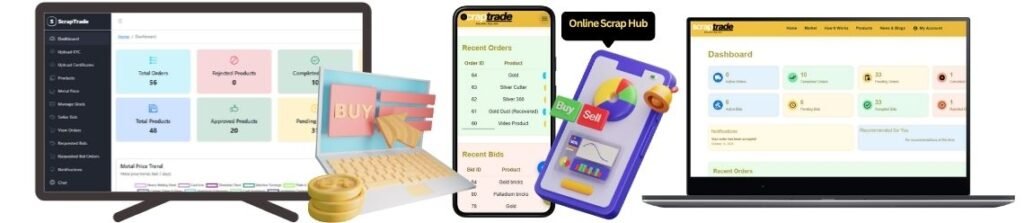
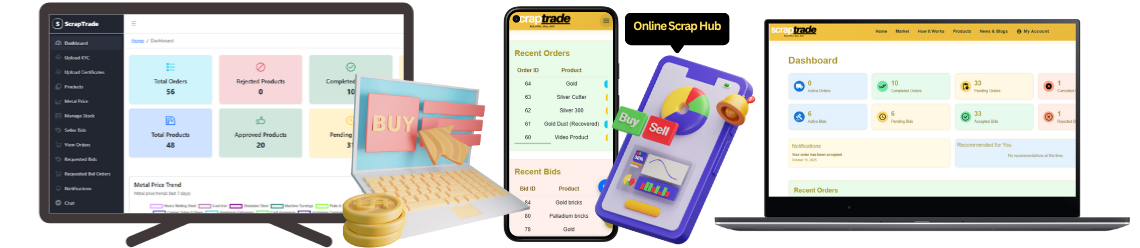
Digital platforms have professionalized the global scrap trade, introducing efficiency and transparency previously absent in fragmented physical markets. These platforms are explicitly built for metal recycling and scrap metal companies, offering intuitive and secure trading environments.15
Integrated Services and Connectivity
Marketplaces such as Global Trade Plaza and World Metal Exchange offer extensive services beyond simple listings. Global Trade Plaza connects verified suppliers and buyers, promising competitive prices and timely delivery.17 Crucially, they integrate knowledgeable Business Development Managers to help navigate the complex requirements of logistics, customs, and compliances needed for effective B2B trade online.17 This human/digital hybrid model is vital, as the regulatory complexity of international trade requires expert guidance to execute seamlessly.
World Metal Exchange enables companies to scale beyond borders easily, integrating built-in logistics support and optimized workflows that allow buying and selling in minutes.15 WME also improves transparency by ensuring every deal is fully transparent and every user is verified.15
4.2. Strategic Value of Specialized Brokerage and Trading Houses
While digital platforms optimize velocity and efficiency, specialized brokerage firms remain vital for customized, complex, or high-volume deals.
Unmatched Access and Customization
Brokerage houses like Imperial Group leverage deep industry expertise and vast global networks to guarantee clients unmatched market access and competitive pricing.18 They offer customized scrap metal trading strategies tailored to the specific goals of clients, ranging from small businesses to large corporations.18 This includes services like expert market insights and trends analysis, as well as advanced risk management strategies to protect investments.18
Companies like Metal Exchange provide customized metal solutions for unique material needs, particularly in the aluminum sector, leveraging their experience and global logistics network to manage the entire supply chain from sourcing to distribution via ocean, rail, and trucking.16 Brokerage and trading services cater to a wide spectrum of industrial clients, including Manufacturing, Utilities, Demolition & Construction, Oil & Gas, and Government Entities.18
4.3. B2B Services for Scrap Generation Management
Industrial scrap generators—those providing 60% of the market volume 5—often utilize specialized recyclers to manage material flow, ensuring profitability and regulatory compliance.
Comprehensive On-Site Support
Industrial recyclers like Greenway Metal Recycling and South Post Oak Recycling Center (SPORC) provide tailored programs that manage the complex logistics of excess material.2 These services include providing container solutions (pick-up and drop-off), safe hauling, live load services, and calibrated scales.19 Greenway specifically notes offering transportation, fuel, equipment, and scrap audits at no additional charge, maximizing the profitability of the recycling program for the generating business.2
The Circular Economy as a Service (CEaaS)
These B2B recycling services fundamentally sell sustainability compliance as a service. They help industrial partners meet environmental regulations and corporate sustainability goals.19 By handling the complex logistics and ensuring materials are diverted from landfills (SPORC has diverted over 500 million pounds of recyclable metals) 19, the recycler provides auditable environmental benefits. This enables industrial partners to outsource the environmental risk and resource management while maintaining focus on core business operations. Transparency is guaranteed through itemized receipts provided within 48 hours, confirming material volume and value.19
V. International Regulatory Compliance and Transboundary Risk
The global trade of secondary metals is heavily regulated by international conventions and evolving national quality standards, requiring meticulous compliance management to mitigate transboundary risk.
5.1. The Basel Convention and Prior Informed Consent (PIC)
The Basel Convention on the Control of Transboundary Movements of Hazardous Wastes and their Disposal governs the international movement of hazardous and certain other wastes.20 It establishes a “notice and consent” regime, also known as Prior Informed Consent (PIC), for such exports.
Trade in covered wastes is generally prohibited without the importing country’s explicit written consent.20 Crucially, the Convention places an active burden of due diligence on the exporting country, prohibiting trade if there is reason to believe the wastes will not be handled in an Environmentally Sound Manner (ESM) at the receiving destination.20 This implies that B2B exporters must not only verify the quality of their own material but also assess the environmental governance and processing capabilities of the receiving facility.
The Convention also restricts trade in covered wastes subject to PIC with non-Parties, except under specific Article 11 bilateral agreements.20 Parties are obligated to transmit notifications of decisions to restrict or prohibit imports and/or exports of hazardous or other wastes through the Secretariat.21
5.2. China’s GB/T 39733-2020: The “Recycled Raw Materials” Standard
China’s implementation of the national standard “Recycling Iron-Steel Materials” (GB/T 39733-2020), effective January 1, 2021, represents a landmark regulatory shift.22
Regulatory Mechanism and Impact
This policy recognizes that materials meeting this stringent quality standard are explicitly not considered solid waste and may be freely imported into China.23 This regulation fundamentally changed market access by effectively mandating a shift toward higher-quality, pre-processed materials, reducing the inflow of contaminated or poorly sorted scrap.
For exporters, strict compliance with documentation is paramount. Shipping documents must use the terminology “recycled raw materials,” not the generic term “scrap,” and must utilize specific customs commodity codes (e.g., 7204100010).22 This requirement establishes purity and quality thresholds as a non-tariff barrier, directing trade toward sophisticated suppliers who invest in the sorting and analysis infrastructure necessary to meet the demanding “raw material” classification.
5.3. Compliance Requirements in Major Importing Markets
Beyond China, other major importing markets impose specific, non-negotiable compliance requirements that dictate operational procedures.
India (DGFT PSIC)
For scrap metal shipments entering India, the Directorate General of Foreign Trade (DGFT) mandates a Pre-Shipment Inspection Certificate (PSIC).24 This certification must be issued by an authorized, accredited third-party agency and is essential for verifying that the scrap metal meets necessary quality and safety standards.24 A critical component of the PSIC is the explicit verification regarding radioactive contamination and the presence of explosive materials.24 Failure to secure a PSIC or passing the safety checks leads to rejection, effectively shifting a significant portion of the compliance and safety burden onto the exporter.
United States (CBP Certification)
The US Customs and Border Protection (CBP) enforces documentary requirements (19 CFR §10.9).25 For scrap purchased in the US domestic market, the dealer must certify to the CBP’s satisfaction that the original metal article was initially manufactured, or subjected to a process of manufacture, in the US.25 This specific certification is crucial for proper duty calculation and import compliance.
5.4. Global Policy Advocacy and Standard Alignment
Industry associations play a crucial role in navigating and shaping the complex global regulatory environment. The Bureau of International Recycling (BIR) facilitates dialogue between producing and consuming markets worldwide to ensure that quality definitions, sustainability metrics, and trade frameworks align.3 BIR actively works to promote a coherent, trusted, and efficient global system that balances open trade with necessary environmental safeguards.3 Similarly, the Recycled Materials Association (ReMA) advocates in Washington, DC, for policies that strengthen international trade, acknowledging that US recyclers must export materials not consumed domestically to maintain investment and efficiency.26
VI. Operationalizing Global Trade: Logistics, Inspection, and Quality Assurance
Executing global B2B scrap metal transactions requires specialized logistics management and mandatory third-party verification to assure quality, quantity, and compliance at the point of origin.
6.1. Specialized Logistics and Supply Chain Optimization
The transportation of scrap metal involves unique challenges, including the handling of heavy loads, adherence to environmental regulations, and the optimization of specialized processing routes.27
Multimodal Network Expertise
Successful international trade relies on managing an extensive multimodal logistics network encompassing ocean, barge, rail, and trucking.16 Specialized logistics providers, such as Transervice, offer expertise in designing customized strategies for dealers, manufacturers, and recycling facilities to optimize the supply chain, improve transportation efficiency, and reduce costs.27 Companies like Sadoff Iron & Metal provide regional dedicated truck fleet dispatching alongside national and international transport options.28
The incorporation of built-in logistics support within digital trading platforms, such as World Metal Exchange 15, recognizes that logistics often represent the primary friction point for international scaling. By simplifying multimodal scheduling and customs documentation, the trading ecosystem enables companies to grow easily beyond borders and increase trade volume without excessive operational hassle.15
6.2. Independent Third-Party Inspection and Certification
Independent third-party inspection is a non-negotiable step for mitigating risk, confirming material integrity, and ensuring regulatory compliance, particularly for destinations mandating pre-shipment certificates.
Comprehensive Inspection Procedures
Accredited third-party inspection agencies, such as Ruswal Global and CISS Group, provide detailed, unbiased procedures covering all critical trade parameters.24 These procedures ensure quality control for both ferrous and non-ferrous scrap throughout the recycling and shipment process.24
The inspection scope is comprehensive:
- Material Integrity: Detailed analysis, material assessment, and verification of scrap composition and quality control are performed.24
- Contamination Check: Crucial verification against the presence of hazardous contaminants, specifically radioactive materials and explosive items, is mandatory for exports to markets like India.24
- Vessel/Container Suitability: Inspection of vessel holds, railway containers, and vehicles is carried out to confirm cleanliness and suitability for cargo transportation, with the issuance of a cleanliness certificate.29
- Process Oversight: 24/7 visual inspection and detailed sampling during the loading process are standard to ensure material quality and quantity align with international sampling standards.29
Risk Mitigation through Verification
The issuance of a full inspection report, including photographic evidence and necessary certificates (like the DGFT PSIC), is vital.24 This independent verification prevents financial losses by mitigating conflicts with suppliers and enabling timely, defensible claims regarding the quality or quantity of the scrap metal.24 The need to certify vessel cleanliness and the absence of explosive materials fundamentally links regulatory compliance directly to physical logistics and safety protocols at the port of origin; non-compliance at this stage, irrespective of the material’s intrinsic quality, can lead to costly shipment rejection.
VII. Strategic Recommendations and Future Outlook
The B2B global scrap metal market is characterized by robust growth, technological innovation, and heightened regulatory complexity. Future success for companies operating in this sphere hinges on the ability to integrate advanced compliance protocols with optimized digital and physical supply chains.
7.1. Synthesis of Market Dynamics and Emerging Trends
The market synthesis reveals three overarching dynamics:
- Circular Economy Momentum: The scrap market is officially an industrial powerhouse, validated by a projected 5.7% CAGR through 2032 and driven by the competitive necessity to reduce energy costs and environmental footprints.2
- Digital Transformation and Security: Digital platforms are aggressively professionalizing trade practices by mitigating counterparty and financial risks through robust security (KYC/B, PSP-guaranteed payments) and integrating essential services like logistics and LME data access, fundamentally challenging historical, opaque trading practices.15
- Geopolitical and Quality Re-alignment: Global trade flows are fragmenting and diversifying, with new hubs (Türkiye, India, Southeast Asia) gaining prominence.3 Concurrently, major importers are using stringent quality standards (e.g., China’s GB/T 39733-2020 and India’s PSIC) as effective policy tools to mandate investment in superior sorting and pre-processing technology at the source.22
7.2. Actionable Strategic Imperatives
Based on the analysis of global trade flows, regulatory requirements, and technological advances, the following strategic imperatives are recommended for optimal B2B engagement:
1. Mandate Regulatory Investment
Establish comprehensive compliance systems capable of navigating complex, evolving international standards. This includes dedicating resources to manage the Prior Informed Consent (PIC) requirements under the Basel Convention 20 and implementing strict protocols to meet specific national standards, such as India’s mandatory Pre-Shipment Inspection Certificate (PSIC).24 Special attention must be paid to documentation for high-demand markets to ensure materials are classified as “recycled raw materials,” avoiding prohibitive solid waste classification.23
2. Invest in Purity Technology
Prioritize capital expenditure on advanced sorting and analysis technologies. The widespread adoption of systems using Artificial Intelligence/Machine Learning (AI/ML) for sorting and analytical tools like Laser-Induced Breakdown Spectroscopy (LIBS) or X-ray Fluorescence (XRF) is crucial.1 These investments ensure materials consistently meet the high purity thresholds required by major consuming markets, transforming material value from “scrap” to “raw material.”
3. Strategic Channel Selection
A hybrid channel strategy is necessary. Digital platforms (e.g., World Metal Exchange) should be utilized for high-velocity, standardized transactions where financial security and efficiency are paramount.15 Conversely, specialized brokerage firms (e.g., Imperial Group) should be engaged for complex scenarios, customized logistics, specialized non-ferrous materials, or navigation of challenging regulatory environments, leveraging their deep industry expertise.18 For industrial generators, outsourcing scrap management to dedicated B2B recyclers guarantees compliance and maximizes recovery value.2
4. Integrate Financial Hedging
Proactive financial risk management is essential due to commodity price volatility. This requires securing direct access to LME data for real-time decision-making 15 and integrating hedging strategies offered by specialized brokers or exchanges to protect against fluctuations impacting inventory and future sales.16 Furthermore, prioritizing digital platforms that offer guaranteed payment structures minimizes counterparty risk and enhances liquidity.
7.3. Key Structural Data Summaries
The following tables summarize the critical structural and operational requirements defining the current global B2B scrap metal trade.
Market Segmentation Overview (2025 Estimates)
| Segment Category | Sub-Segment | Estimated 2025 Market Share | Primary Rationale/Source |
| Metal Type | Ferrous Metals (Iron & Steel) | 70.7% | Abundance, broad industrial application 5 |
| Source | Industrial Scrap | 60% | Consistent large volumes from manufacturing/fabrication 5 |
| Region | Asia Pacific | 41.2% | Robust industrial growth, infrastructure projects, government policies 5 |
Global Trading Channel Advantages and Risk Mitigation
| Trading Channel | Key Strategic Advantage | Core Service Offerings | Primary Risk Mitigation |
| Digital Platforms (e.g., WME) | Efficiency and Scalability | KYC/B Verification, Guaranteed Payments (PSP), LME Data Access, Built-in Logistics 15 | Financial risk, Counterparty risk, High credit insurance costs 15 |
| Traditional Brokerage (e.g., Imperial Group) | Expertise and Customization | Deep Market Insights, Global Network, Tailored Trading Solutions 18 | Price volatility risk, Complex material handling, Market access |
| Industrial Recyclers (e.g., SPORC, Greenway) | Source Management/Compliance | Container Solutions, Hauling, Scrap Audits, Regulatory Compliance 2 | Environmental compliance, Waste management costs |
Key International Regulatory Compliance Requirements
| Jurisdiction/Convention | Regulation/Standard | Compliance Requirement for Exporter | Strategic Implication |
| China | GB/T 39733-2020 | Label material as “Recycled Raw Materials” (not “scrap”). Must meet strict quality standards 22 | Essential for accessing the Chinese market without “solid waste” restrictions. |
| India (DGFT) | Import Regulations | Mandatory Pre-Shipment Inspection Certificate (PSIC) by authorized agency 24 | Absolute requirement for safety (radioactive, explosive) and quality verification, shifting compliance burden to exporter. |
| International | Basel Convention | Prior Informed Consent (PIC) regime for designated wastes 20 | Mandates regulatory dialogue and written consent from the receiving country; crucial for avoiding international incidents. |
7.4. Future Outlook
The trajectory of the global scrap metal market suggests continued upward pressure on demand, fueled by the accelerating global transition to “green steel” and other low-carbon metals. This will further intensify the requirement for high-quality ferrous and non-ferrous input materials. International standards bodies, such as the BIR, will remain critical in advocating for harmonized standards to counteract protectionist policies and facilitate the movement of materials necessary for the truly global circular economy.3 The integration of advanced technology, specifically AI-driven sorting and real-time analytical tools, will become standard practice, defining the competitive edge for suppliers capable of consistently providing materials that meet the stringent “recycled raw material” thresholds imposed by major consuming nations.
Works cited
- Top Trends in the Scrap Metal Industry for 2025 – Action Metals Recyclers, accessed on October 30, 2025, https://www.actionmetalsrecyclers.com/top-trends-in-the-scrap-metal-industry-for-2025/
- Advantages of B2B Scrap Metal Recycling, accessed on October 30, 2025, https://greenwaymetalrecycling.com/advantages-of-b2b-scrap-metal-recycling/
- Understanding BIR’s Role in Global Recycling and Circular Metal Trade – METYCLE, accessed on October 30, 2025, https://metycle.com/articles/future/understanding-birs-role-in-global-recycling
- Position Papers – BIR, accessed on October 30, 2025, https://www.bir.org/en/publications/position-papers
- Scrap Metal Recycling Market Size and Forecast, 2025-2032 – Coherent Market Insights, accessed on October 30, 2025, https://www.coherentmarketinsights.com/industry-reports/scrap-metal-recycling-market
- Metal Recycling Market: Demand, Production, and Future Projections, accessed on October 30, 2025, https://www.towardschemandmaterials.com/insights/metal-recycling-market
- Non-Ferrous Scrap Metal Market Size, Growth | Report [2033], accessed on October 30, 2025, https://www.marketgrowthreports.com/market-reports/non-ferrous-scrap-metal-market-112292
- accessed on October 30, 2025, https://mepsinternational.com/gb/en/news/us-scrap-exports-decline-for-third-consecutive-year#:~:text=The%20United%20States%20remains%20the,over%20the%20past%20three%20years.
- Global Scrap Monitor – International Trade Administration, accessed on October 30, 2025, https://www.trade.gov/sites/default/files/2024-05/Global%20Scrap%20Monitor%20One%20Pager.pdf
- Ferrous Metals Market Data | S&P Global, accessed on October 30, 2025, https://www.spglobal.com/commodity-insights/en/products-solutions/steel-metals/ferrous-metals-market-data
- Aluminum Scrap Imports and Source Countries, January-December 2024, accessed on October 30, 2025, https://www.metal.com/en/newscontent/103149484
- Argus Scrap Market: Latest Scrap Prices & Metal Scrap News – Argus Media, accessed on October 30, 2025, https://www.argusmedia.com/en/solutions/products/argus-scrap-markets
- Metals Price Assessments | S&P Global, accessed on October 30, 2025, https://www.spglobal.com/commodity-insights/en/pricing-benchmarks/assessments/metals
- Scrap Metal Price Index – Metaloop, accessed on October 30, 2025, https://www.metaloop.com/scrap-metal-price/
- WME, accessed on October 30, 2025, https://www.worldmetalexchange.com/en
- Metal Exchange, accessed on October 30, 2025, https://www.metalexchange.com/
- Best online B2B marketplace for Metal Scraps Suppliers & Buyers – Global Trade Plaza, accessed on October 30, 2025, https://globaltradeplaza.com/categories/minerals-metals/metal-metal-products/metal-scraps
- Scrap Metal Brokerage and Trading Services | Imperial Group, accessed on October 30, 2025, https://imperialgp.com/scrap-metal-brokerage/
- Industrial & Commercial Scrap Metal Recycling Solutions, accessed on October 30, 2025, https://southpostoakrecycling.com/businesses-government/
- Basel Convention on Hazardous Wastes – United States Department of State, accessed on October 30, 2025, https://www.state.gov/key-topics-office-of-environmental-quality-and-transboundary-issues/basel-convention-on-hazardous-wastes/
- Import / Export Restrictions tool – Basel Convention, accessed on October 30, 2025, https://www.basel.int/Countries/ImportExportRestrictions/tabid/4835/Default.aspx
- China Allows Imports of Recycled Iron and Steel Materials – HKTDC Research, accessed on October 30, 2025, https://research.hktdc.com/en/article/NjQxMTI5Nzk1
- China’s New Iron and Steel Scrap Import Standards May Benefit Recyclers, accessed on October 30, 2025, https://www.recycledmaterials.org/new-iron-steel-scrap-import-standards/
- How we conduct Scrap Metal Surveys – cargo inspection services – Ruswal Global, accessed on October 30, 2025, https://ruswalglobal.com/how-ruswal-conduct-scrap-metal-inspections/
- CROSS Ruling – Customs and Border Protection, accessed on October 30, 2025, https://rulings.cbp.gov/ruling/H245922
- Recycled Materials Association: Home, accessed on October 30, 2025, https://www.recycledmaterials.org/
- Metal and Recycling Logistics Solutions, accessed on October 30, 2025, https://www.transervice.com/industries/metals-recycling/
- Logistics – Buy Recycled Scrap Metal Materials | Sadoff, accessed on October 30, 2025, https://sadoff.com/buy-recycled-scrap-metal-from-sadoff/logistics-solutions/
- Metal inspection services | CISS GROUP, accessed on October 30, 2025, https://ciss-group.com/service/survey/survey-by-industry/metals-and-minerals/metal-inspection/